Nearly 30 years after the murder of Tupac Shakur, the courtroom where prosecutors hope to finally establish criminal responsibility for his death spent a second day confronting one of the biggest challenges surrounding this case.
How do you find an impartial jury for the murder of Tupac?
On Tuesday, August 11, jury selection continued in State of Nevada vs. Duane “Keffe D” Davis, with attorneys individually questioning prospective jurors about everything from their experiences with crime and the criminal justice system to their exposure to Tupac’s murder through traditional media and social media.
And Day Two made something increasingly clear.
Before prosecutors and the defense can argue about what happened on the Las Vegas Strip in 1996, they first have to find jurors capable of separating what they have heard for the past three decades from what they will actually hear in court.
Day Two at a Glance
- Date
- Tuesday, August 11, 2026
- Court
- Clark County District Court, Las Vegas
- Judge
- Carli Kierny
- Stage
- Individual questioning of prospective jurors
- Advancing
- News 3 Las Vegas reported 19; FOX5 reported 15
- Next Panel
- 50 additional prospective jurors due Wednesday morning
- Final Jury
- 12 jurors plus four alternates
- Opening Statements
- Currently anticipated Monday, August 17
Who Can Really Be Impartial?
The court continued examining prospective jurors individually Tuesday.
Some candidates did not make it very far.
One woman was excused after indicating that a language barrier could affect her ability to fully understand the proceedings.
Another prospective juror raised concerns about whether he could remain impartial.
A third said serving during a trial expected to last approximately four to five weeks would create a financial hardship.
Those concerns illustrate the practical difficulty of assembling a jury for a case of this magnitude.
This is not simply a high-profile murder trial. It involves one of the most recognizable artists in modern American music, a killing that has generated documentaries, books, interviews, podcasts, conspiracy theories and countless hours of television coverage.
Prospective jurors are not entering the courtroom with a blank slate.
The question is whether they can put everything they think they know aside.
Autopsy Photos and the Reality of the Case
Day Two also brought potential jurors face-to-face with the reality of what they could eventually be asked to see.
According to FOX5 courtroom reporting, prospective jurors were questioned about their ability to view evidence that could include Tupac Shakur’s autopsy photographs.
One candidate was ultimately excused following discussions involving the attorneys and the judge despite indicating a willingness to view the evidence.
It is a sobering reminder that beneath the mythology surrounding Tupac’s death is a homicide prosecution.
For nearly three decades, the murder has been discussed as part of hip-hop history.
Inside this courtroom, prosecutors will attempt to present it as something very different: a criminal case involving a 25-year-old man who was shot multiple times and died six days later.
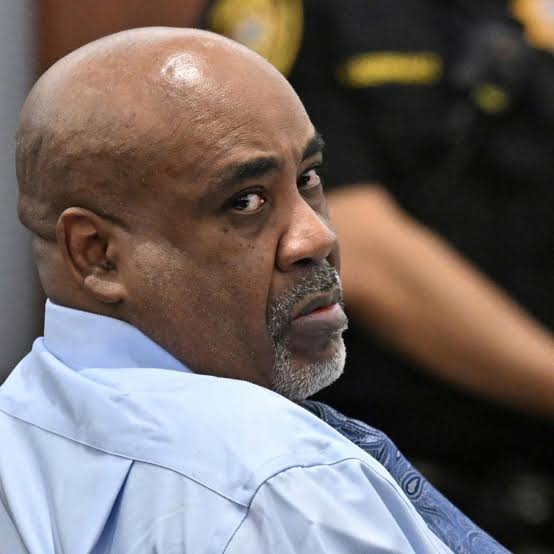
Davis Active at the Defense Table
Davis remained engaged with his defense during Tuesday’s proceedings.
FOX5 reported that he was observed passing notes to his attorney as prospective jurors were questioned. His son was also reportedly seated behind him in the courtroom.
Davis, now 63, has pleaded not guilty.
Prosecutors accuse him of helping orchestrate the September 7, 1996 attack that left Tupac mortally wounded.
Their theory does not require them to prove Davis personally pulled the trigger.
Authorities allege Davis provided the weapon used in the shooting and participated in the retaliatory plan following the MGM Grand altercation involving Tupac, members of the Death Row Records entourage and Davis’ nephew, Orlando “Baby Lane” Anderson.
The Numbers Are Beginning to Narrow
By the conclusion of Tuesday’s proceedings, a group of prospective jurors had survived the initial individual questioning and were instructed to return Thursday for the next stage of selection.
There was a discrepancy in late-day local reporting over the exact number advancing.
News 3 Las Vegas reported that 19 prospective jurors had advanced through the first two days, while FOX5 reported 15 candidates moving forward.
What is clear is that the court is not finished.
Judge Carli Kierny is seeking a larger qualified pool before attorneys begin the process that will ultimately determine who actually sits on the jury.
Another group of 50 prospective jurors is scheduled to report Wednesday morning, with the court continuing to work toward a pool large enough for the next phase of selection.
The final jury is expected to include 12 jurors along with four alternates because of the anticipated length of the trial.
The Book That Could Define the Trial
While jurors were being questioned inside the courthouse, attention outside the courtroom continued focusing on what could become one of the prosecution’s most powerful pieces of evidence.
Davis’ own words.
Former Clark County District Attorney David Roger told FOX5 Tuesday that Davis’ memoir, Compton Street Legend, could become a central focus of the trial.
That is significant because prosecutors face an unusual situation.
The other men authorities have identified as occupants of the white Cadillac connected to Tupac’s shooting are dead.
Orlando Anderson is dead.
Deandrae “Freaky” Smith is dead.
Terrence “T-Brown” Brown is dead.
Davis is the remaining alleged occupant.
And prosecutors intend to use statements he made years after Tupac’s death to help establish their case.
The defense is expected to attack those statements by arguing that Davis exaggerated, embellished or fabricated portions of his accounts for attention and commercial benefit.
That sets up what could become one of the defining battles of the entire trial.
If prosecutors say his stories are admissions, while his attorneys say they were entertainment and exaggeration, jurors will have to decide where storytelling ends and criminal evidence begins.
Why Did It Take 30 Years?
That question continues hovering over the entire proceeding.
Tupac was shot on September 7, 1996.
He died September 13.
Davis was not arrested until September 2023.
Now, in August 2026, a jury is finally being assembled.
The enormous passage of time creates challenges for both sides.
Witnesses have died.
Memories have faded.
Physical evidence has aged.
Public narratives have hardened into what many people already believe to be fact.
And the defendant himself has spent years publicly discussing the killing.
That makes jury selection more than a procedural formality. It could become one of the most consequential stages of the trial.
Day Two Ends Without a Jury, but With the Case Moving Forward
There were no opening statements Tuesday.
No witnesses took the stand.
No evidence from the night Tupac was shot was presented to the jury.
Because there is not a jury yet.
But Day Two moved the court closer to having one.
Another 50 prospective jurors are expected Wednesday. The next round of jury selection is scheduled for Thursday, and opening statements are currently anticipated for Monday, August 17.
That is when this case changes.
Once a jury is seated, the nearly 30-year conversation surrounding Tupac Shakur’s murder will no longer be driven primarily by documentaries, street accounts, interviews and speculation.
The State of Nevada will have to prove its allegations.
The defense will have the opportunity to challenge them.
And a group of Nevada citizens will ultimately be asked to answer the question the hip-hop world has debated since 1996:
What can actually be proven about the murder of Tupac Shakur?
For now, that question remains unanswered.
But after Day Two, the courtroom is one step closer to confronting it.
Black Beat Trial Watch
Black Beat Magazine will continue following State of Nevada vs. Duane “Keffe D” Davis throughout the Tupac Shakur murder trial, separating what happens inside the courtroom from the rumors and mythology that have surrounded this case for nearly three decades. Missed the start? Read Day One, or continue with Day Three. Also read our open letter on Tupac, accountability, justice and legacy.