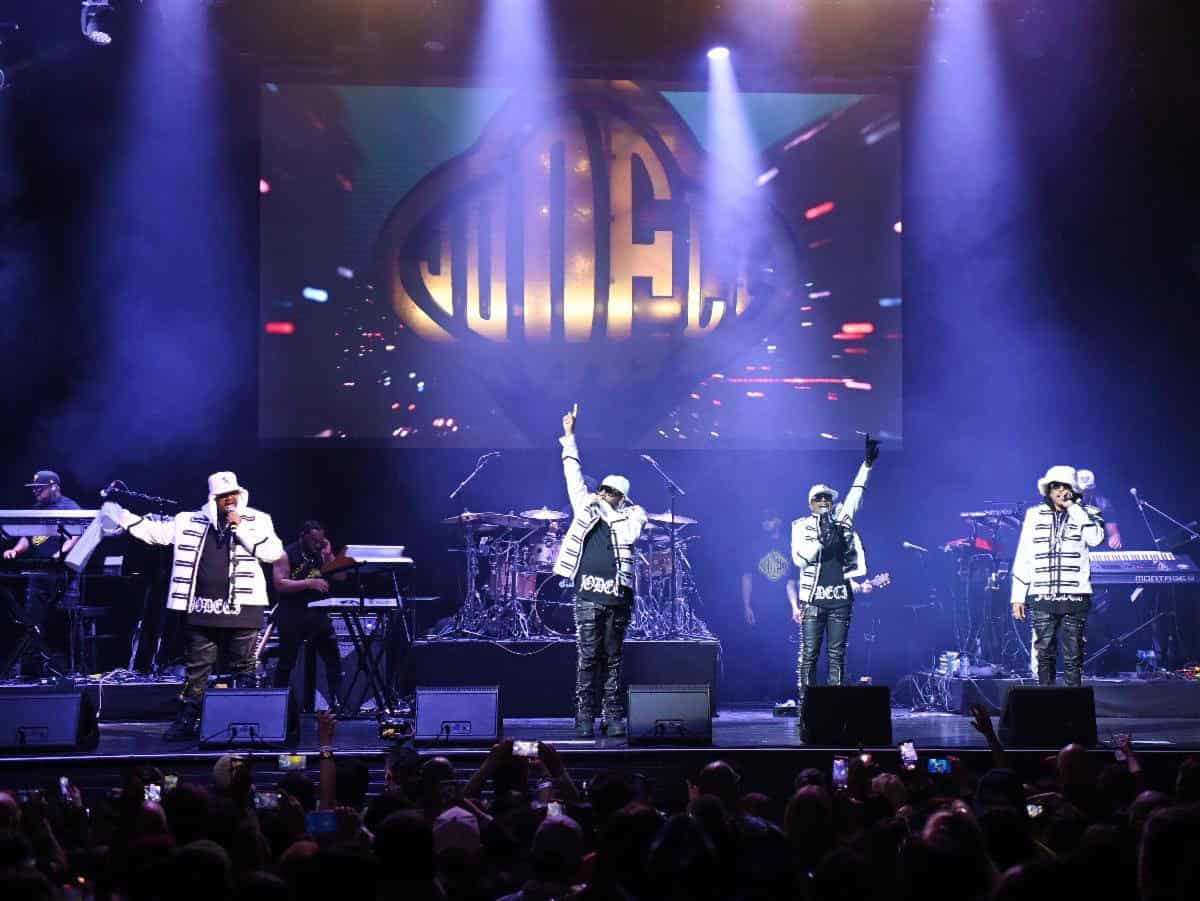
There are successful groups. There are influential groups. Then there are artists who permanently change the vocabulary of a genre.
Jodeci belongs in that last category.
As 2026 marks 35 years since the arrival of Jodeci’s landmark debut era, the anniversary represents more than nostalgia for one of the most important R&B groups of the 1990s. It is an opportunity to recognize the enormous impact DeVante Swing, Mr. Dalvin, K-Ci and JoJo had on the sound, attitude and presentation of contemporary Black music.
When Forever My Lady arrived in 1991, R&B was already experiencing an extraordinary period of transformation. New jack swing had brought hip-hop rhythms into mainstream R&B, while vocal groups remained an essential part of Black music.
Jodeci took those ingredients somewhere different.
They could sing with the discipline and emotional intensity of the great soul groups that came before them, but they did not necessarily look like traditional R&B stars. The boots, leather, dark clothes, oversized silhouettes, baseball caps and unmistakable swagger gave them an edge that felt closer to the emerging hip-hop generation.
And then they opened their mouths.
Four Voices. One Revolution.
Jodeci was formed around two sets of brothers: Cedric “K-Ci” Hailey and Joel “JoJo” Hailey, alongside Donald “DeVante Swing” DeGrate Jr. and Dalvin “Mr. Dalvin” DeGrate.
Together, they created a chemistry that was difficult to duplicate.
K-Ci possessed one of the most recognizable voices of his generation, a raw, church-rooted instrument capable of moving from a whisper to an explosive cry. JoJo provided a smoother emotional counterbalance. Mr. Dalvin contributed vocals, musicianship and creative energy, while DeVante emerged as the group’s sonic architect.
That combination became combustible.
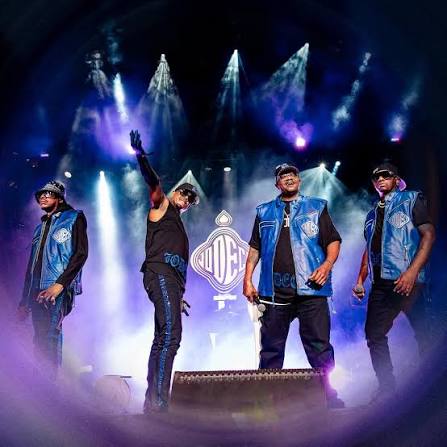
Their debut album, Forever My Lady, introduced a group capable of making romance sound vulnerable, sensual, desperate and streetwise at the same time.
Songs including “Come and Talk to Me,” “Stay,” “I’m Still Waiting” and the title track “Forever My Lady” helped establish Jodeci as a dominant force in R&B.
But the group’s importance extended beyond hit records.
Where the Church Met the Streets
One of the keys to understanding Jodeci is understanding the musical tradition behind the group.
Long before the fame, videos and sold-out performances, there was gospel.
That foundation remained audible throughout Jodeci’s music. Their harmonies could be sophisticated, but the performances were rarely clinical. Voices cracked. Notes stretched. Ad-libs became pleas. A love song could suddenly carry the emotional intensity of a Sunday morning testimony.
That tension became part of the Jodeci formula:
- Gospel Vocals
- Hip-Hop Attitude
- Soul Songwriting
- Bedroom Intimacy
It was a combination perfectly suited for a generation whose musical identity increasingly moved between R&B and hip-hop.
Jodeci did not simply coexist with hip-hop culture.
They looked comfortable inside it.
That distinction mattered.
DeVante’s Sonic Laboratory
Any discussion of Jodeci’s legacy must also recognize DeVante Swing’s importance as a producer and creative visionary.
As Jodeci evolved, its records became darker, more atmospheric and increasingly adventurous.
The group’s 1993 sophomore album, Diary of a Mad Band, pushed deeper into that territory. Records such as “Cry for You,” “Feenin’” and “My Heart Belongs to U” reinforced Jodeci’s ability to make vulnerability sound powerful rather than polished.
DeVante’s production helped establish an environment around the voices. The drums could feel aggressive. The arrangements could be sparse and moody. Samples, keyboards, harmonies and unconventional textures created records that belonged equally in the bedroom, the club and the car.
It was R&B without the tuxedo.
Jodeci was helping create a bridge between traditional soul music and the increasingly hip-hop-centered direction of Black popular music.
The Show, the After Party, the Hotel
By 1995, Jodeci had become one of the defining R&B acts of the decade.
Their third album, The Show, the After Party, the Hotel, arrived with a title that perfectly captured the group’s image.
This was not the clean-cut presentation traditionally associated with male vocal groups.
Jodeci represented something more dangerous, sensual and unpredictable.
Songs such as “Freek’n You,” “Love U 4 Life” and “Get On Up” expanded the group’s catalog while reinforcing the musical identity they had spent years developing.
The album also demonstrated how far the group had traveled creatively in only a few years.
The young men who had introduced themselves with Forever My Lady had become architects of an entirely new R&B aesthetic.
The Blueprint for a Generation
Jodeci’s influence became even clearer in the years that followed.
The combination of soulful singing, hip-hop production, street fashion, vulnerability and unapologetic sensuality became a blueprint that countless artists would explore.
You can hear pieces of that DNA throughout later generations of R&B.
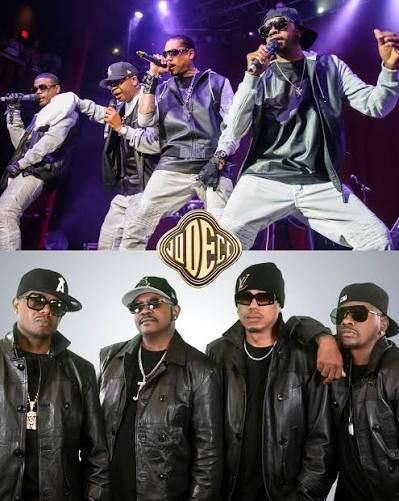
The genre increasingly became comfortable with darker production, conversational lyrics, harder drums and singers who looked as if they belonged in a rap video as naturally as they belonged in an R&B ballad.
That shift did not happen because of one group alone, but Jodeci unquestionably helped accelerate it.
Their influence can be heard and seen across male vocal groups, solo singers, producers and the broader alternative R&B movement that followed decades later.
The modern relationship between R&B and hip-hop feels natural today.
K-Ci & JoJo Carry the Sound Forward
Jodeci’s original run eventually gave way to another successful chapter when K-Ci and JoJo emerged as a duo.
Their success introduced the Hailey brothers to another generation of listeners and produced major records, including “All My Life.”
Yet even as K-Ci and JoJo developed their own identity, the appetite for Jodeci never disappeared.
The group’s music continued to live through radio, sampling, streaming, slow-jam playlists, parties and a generation of artists who openly acknowledged its influence.
For longtime fans, Jodeci records became time machines.
For younger listeners discovering the group decades later, the music often sounded surprisingly contemporary.
That may be one of the greatest measurements of Jodeci’s impact.
The records aged, but the ideas behind them did not.
The Return
After nearly two decades without a new studio album, Jodeci returned in 2015 with The Past, The Present, The Future.
The title was appropriate.
Jodeci had a past worth celebrating, a present built on an extraordinarily loyal audience and a future secured by an influence that had already spread far beyond the four original members.
The comeback also reminded audiences of something important.
Jodeci was not simply a collection of hit records from the 1990s.
The group represented a specific chemistry.
K-Ci. JoJo. DeVante. Dalvin.
Four distinct personalities whose combined talents produced something none of them could have created in exactly the same way individually.
35 Years Later
Thirty-five years after Forever My Lady, the cultural landscape surrounding Jodeci has changed dramatically.
Albums became streams. Radio surrendered some of its power to algorithms. Music videos moved from television networks to phones. Social media transformed the relationship between artists and fans.
Yet press play on the opening moments of a classic Jodeci record and much of that disappears.
The voices remain. The harmonies remain. The vulnerability remains. The swagger remains.
Most importantly, the influence remains.
Jodeci helped prove that Black men could sing openly about desire, heartbreak, devotion and emotional dependence without sacrificing their edge. They helped erase the artificial boundary separating the R&B singer from hip-hop culture. They demonstrated that gospel-rooted vocals could exist over hard production without diminishing either tradition.
They also reminded the industry of something Black music has demonstrated repeatedly throughout history.
Innovation often happens when traditions collide.
For Jodeci, those traditions were church, soul, R&B and hip-hop.
The collision changed the music.
Forever Jodeci
The title Forever My Lady was originally about love, but 35 years later, the word “forever” carries another meaning.
It speaks to permanence.
Jodeci’s place in R&B history is no longer a question of chart positions, record sales or nostalgia. Their legacy can be measured by what came after them.
Every generation eventually produces artists who refuse to fit neatly into the categories handed to them.
Jodeci was one of those groups.
They arrived looking different, sounding different and carrying the emotional power of the church into a musical world increasingly driven by hip-hop.
Thirty-five years later, R&B is still living inside some of the possibilities they helped create.
Four men. Two sets of brothers. Three landmark albums during their original run. One unmistakable sound.