BEVERLY HILLS, CALIFORNIA — Black music has never existed solely for entertainment.
It has documented our history. It has carried our joy and our pain. It has powered movements, created industries, launched global trends and transformed artists into cultural leaders whose voices reach far beyond a recording studio.
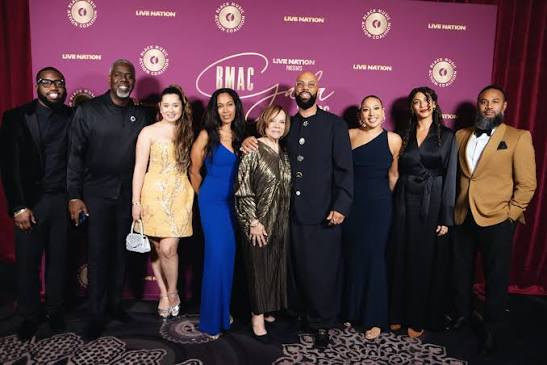
That larger legacy was at the center of the sixth annual Black Music Action Coalition Gala, held September 24, 2026, at The Beverly Hilton in Beverly Hills.
Presented by Live Nation and hosted by cultural personality and entrepreneur Kenny Burns, the BMAC Gala brought artists, executives, advocates and other cultural leaders together for an evening that celebrated achievement while keeping the conversation centered on something larger: using influence to create opportunity, accountability and measurable change.

For Black Beat Magazine, an institution that has documented Black music and culture for generations, the significance of that mission is unmistakable.
This was more than another night of awards.
It was a reminder that Black music is an economic force, a cultural institution and, at its most powerful, an instrument for change.
From Celebration to Action
The Black Music Action Coalition, commonly known as BMAC, was established in 2020 amid a national reckoning over racial injustice. Its stated mission is centered on racial equity and justice within the music business while harnessing the collective influence of the industry to improve communities and pursue systemic change.
That distinction matters.
BMAC isn’t simply celebrating Black excellence within an industry that has benefited enormously from Black creativity. The organization has sought to connect recognition with accountability.
The annual gala has become one of the visible expressions of that philosophy, honoring artists and industry professionals who have used their platforms to advance change.
Standing before the 2026 audience, BMAC co-founder, president and CEO Willie “Prophet” Stiggers made clear that the organization views the evening as more than a celebration.
His message reflected the historical relationship between Black music and Black resistance: generations of artists turning lived experiences into records that eventually became part of America’s cultural vocabulary.
The underlying question of the evening was therefore not simply who has achieved success.
It was: What are we doing with that success?
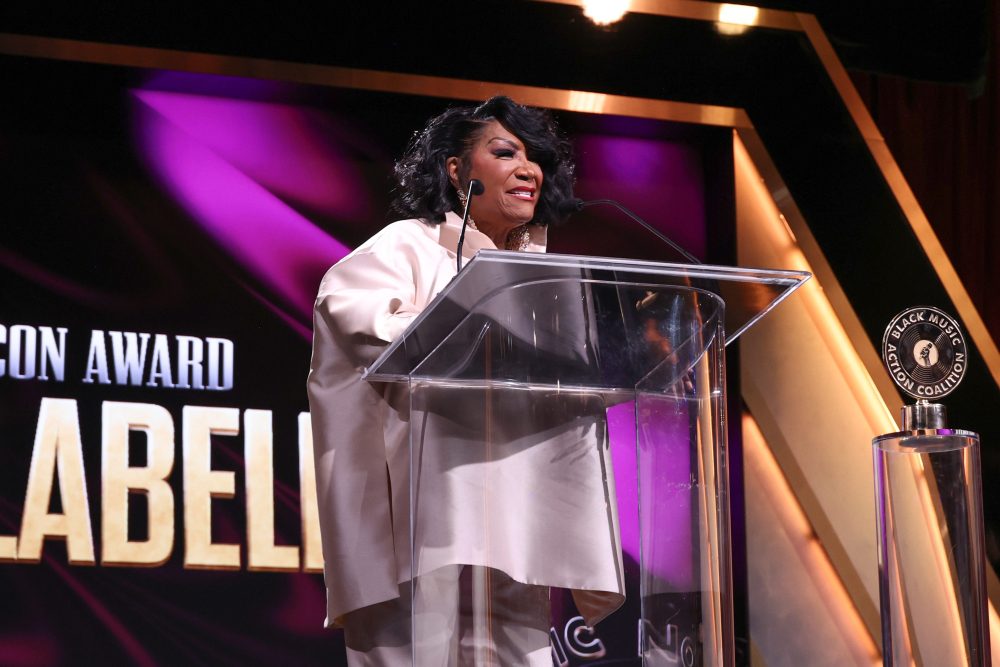
Patti LaBelle: An Icon in Every Sense
Few artists better embody the endurance of Black music than Patti LaBelle.
LaBelle received the BMAC Icon Award, adding another honor to a career spanning more than six decades.
Her journey from the Bluebelles and the groundbreaking group Labelle to solo superstardom represents multiple eras of Black music history.
But numbers, records and accolades only explain part of Patti LaBelle’s importance.
Her influence stretches across generations of vocalists. Her unmistakable voice, theatrical stage presence and longevity helped create a blueprint for artists who followed.
Director Lee Daniels presented LaBelle with the honor, while the musical tributes brought her catalog back to center stage.
Chanté Moore performed “Love, Need and Want You,” while gospel powerhouse Le’Andria Johnson delivered “You Are My Friend.”
Then came a moment that transformed a tribute into something more intimate: Johnson and LaBelle joining together, connecting generations through the music itself.
For a room built around Black musical history, it was a fitting reminder that legends don’t simply leave catalogs.
Common: Artistry With Responsibility
Common received the BMAC Harry Belafonte Change Agent Award, an honor carrying particular significance because of the legacy behind the name.
Harry Belafonte demonstrated throughout his life that celebrity could coexist with sustained activism.
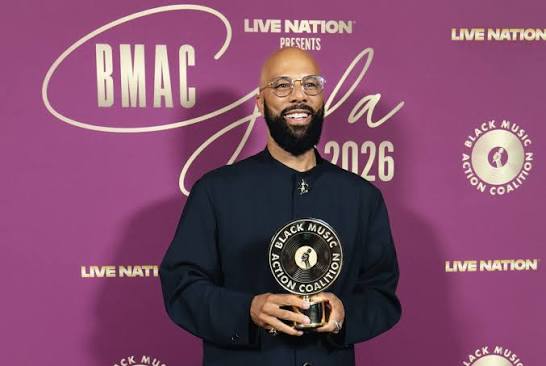
Common has similarly built a career extending well beyond music.
From hip-hop to acting, writing, philanthropy and community advocacy, he has consistently operated at the intersection of creativity and social engagement.
The award was presented by Common’s mother, Dr. Mahlia Hines, giving the recognition an especially personal dimension.
The symbolism was powerful.
The artist who emerged from Chicago to become one of hip-hop’s most respected voices was being recognized not simply for what he created, but for how he has used the platform that creation gave him.
Public Enemy: Fighting the Power Still Matters
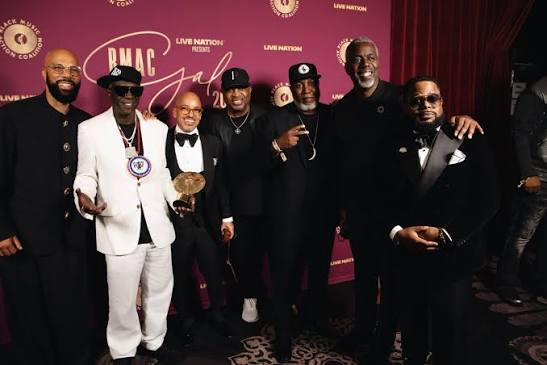
If any group represents the idea of music as a vehicle for political and social consciousness, Public Enemy belongs in that conversation.
The legendary group received the BMAC Social Impact Award, presented by another hip-hop icon, Big Daddy Kane.
Public Enemy helped redefine what mainstream rap could say and what it could confront.
Chuck D’s commanding voice, Flavor Flav’s unmistakable presence and the group’s uncompromising approach turned records into conversations about power, race, media, history and inequality.
Decades later, their influence remains embedded throughout hip-hop.
Recognizing Public Enemy at a BMAC Gala therefore felt less like revisiting history and more like acknowledging a lineage.
Hip-hop has always contained entertainment.
But it has also contained journalism, protest, testimony and resistance.
Public Enemy helped prove that those things could coexist on the same record.
Honoring the Executives Behind the Culture
The 2026 BMAC Gala also made an important point that can sometimes get lost when discussing Black music:
Artists do not build the industry alone.
Executives, managers, agents, attorneys, strategists, marketers and advocates frequently determine who receives access, who receives investment and who gets an opportunity to move from talent to sustainable career.
BMAC recognized several of those figures.
Nicole Wyskoarko, president and head of urban A&R at Interscope Geffen A&M, received the inaugural BMAC Sylvia Rhone Visionary Award, presented by Sylvia Rhone herself.
Naming the award for Rhone carries enormous significance. Her career represents generations of Black executive leadership and demonstrates the possibilities created when Black executives are not simply allowed into corporate spaces but empowered to lead them.
Tina Davis received the BMAC Clarence Avant Trailblazer Award, presented by Montell Jordan.
The award invokes another towering figure in Black entertainment history.
Clarence Avant — widely known as “The Black Godfather” — represented a particular kind of power within entertainment: relationships, ownership, negotiation, mentorship and the ability to open doors for others.
BMAC also recognized members of The Team with its Founders Award, celebrating influential representation executives whose work has helped shape major careers.
Meanwhile, members of Universal Music Group’s Global Impact Team received the BMAC 365 Award, recognizing work designed to make impact an ongoing responsibility rather than a once-a-year conversation.
The Power Behind the Platform
One of the most important ideas emerging from BMAC is deceptively simple:
An artist can have millions of followers.
An executive can control enormous resources.
A corporation can issue statements supporting equality.
But the deeper measurement is what happens afterward.
Who gets hired? Who gets promoted? Who gets funded? Who owns intellectual property? Who receives internships and mentorship? Who gets into rooms where decisions are actually made?
And after someone gains power, do they leave the door open for the next generation?
Those questions go directly to the economic structure surrounding Black music.
Black culture has consistently generated extraordinary value.
BMAC’s work challenges the industry to examine how that value translates into opportunity for the people and communities responsible for creating it.
Black Music Is Bigger Than Music
There was another message hovering over the Beverly Hilton ballroom.
Black music cannot be separated from American history.
Gospel helped carry a people through struggle. Blues transformed hardship into testimony. Jazz became one of America’s greatest artistic exports. Soul became the soundtrack of both romance and revolution. Funk created new musical languages. Disco changed nightlife. R&B continually reinvented intimacy and style. Hip-hop grew from neighborhood expression into one of the dominant cultural forces on Earth.
And throughout those movements, Black creators repeatedly turned circumstances that could have silenced them into sounds the world eventually adopted.
That is why organizations such as BMAC matter.
The discussion is no longer simply about whether Black music receives recognition.
The world has already answered that question.
Black music is everywhere.
The contemporary question is whether the economic structures surrounding that music reflect the extraordinary value Black creators continue to generate.
Honoring the Shoulders We Stand On
During his remarks, Stiggers invoked several giants whose legacies now live through BMAC honors: Harry Belafonte, Clarence Avant, Quincy Jones and Sylvia Rhone.
Each represents a different expression of leadership.
Belafonte demonstrated the responsibility of the platform.
Avant demonstrated the power of access and relationships.
Jones demonstrated the limitless reach of Black creative genius.
Rhone demonstrated Black executive leadership at the highest levels of the record business.
Together, their names establish a standard that extends beyond personal success.
The message is about what happens after success arrives.
Do you create another opportunity? Do you advocate when advocacy carries a cost? Do you invest? Do you mentor? Do you hire? Do you build institutions capable of surviving beyond your own career?
Those may ultimately be more important measurements of legacy than awards themselves.
A Night of Pride, Perseverance and Purpose
The sixth annual BMAC Gala successfully occupied two worlds.
It was a celebration of Black excellence and a challenge to the industry responsible for profiting from that excellence.
There were legendary artists. There were powerful executives. There were performances, tributes and emotional moments.
But beneath the glamour was a much more consequential conversation about power.
Who possesses it. Who receives access to it. How it is used. And whether today’s generation is prepared to build something strong enough for tomorrow’s generation to inherit.
For more than four decades, Black Beat Magazine has understood that documenting Black music means documenting more than records, charts and celebrities.
It means documenting culture, business, ownership, struggle, innovation, influence and legacy.
The BMAC Gala sits squarely within that tradition.
Because when Patti LaBelle walks onto a stage, we aren’t simply looking at an entertainer.
We’re looking at history.
When Public Enemy is honored, we’re witnessing the continuing influence of music created to challenge systems.
When Common is recognized for activism, we’re seeing an artist embrace responsibility beyond celebrity.
And when Black executives and industry leaders are honored alongside the performers, we’re acknowledging an essential truth:
The future of Black music isn’t only about who holds the microphone. It’s also about who owns the company, controls the capital, negotiates the deal, develops the talent, opens the door and creates opportunities for the people coming behind them.
That may be the most important message coming out of the 2026 BMAC Gala.
Celebrate the culture.
Honor the legends.
Recognize the progress.
But keep building.
Because Black music has already changed the world.
The work now is ensuring that the people who create the culture have the opportunity, ownership and power to shape its future.
Black Beat Magazine
Celebrating Our History. Honoring Our Legacy Since 1983.