
It doesn’t feel like 25 years.
Maybe that’s because Aaliyah never really left us.
Her voice is still coming through our speakers. Her style is still being recreated by a generation that wasn’t even born when she was making records. Her videos still look cool. Her music still sounds fresh. And every time those opening notes of “One in a Million” come on, there is a feeling that immediately takes us somewhere.
For those of us who experienced Aaliyah in real time, she wasn’t simply another R&B singer with hit records.
And on August 25, 2001, when we learned that Aaliyah Dana Haughton had died at only 22 years old, it felt impossible.
Twenty-five years later, it still does.
We Watched Her Grow Up
Part of what made Aaliyah special was that we grew with her.
When she arrived in 1994 with Age Ain’t Nothing but a Number, she was only 15 years old. There was something immediately different about her. She wasn’t trying too hard. She wasn’t screaming for attention.
She had this quiet confidence.
The oversized clothes. The sunglasses. The hair covering one eye. That smooth voice.
Aaliyah could walk into a room without saying much and somehow still become the person everybody noticed.
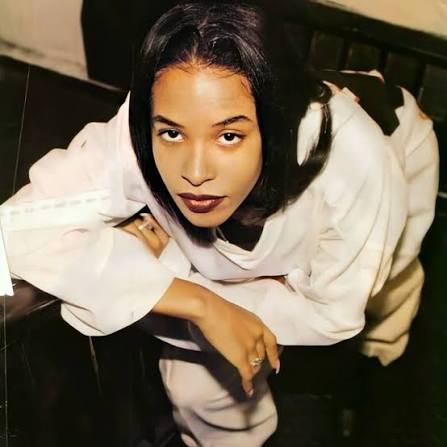
But what we remember most is how naturally everything seemed to come together.
She was beautiful, but beauty wasn’t the whole story. She could dance. She could act. She had style. She had personality. And when she sang, there was a softness in her voice that became unmistakably hers.
You knew an Aaliyah record when you heard one.
Then She Changed the Sound
When One in a Million arrived in 1996, something happened.
Aaliyah wasn’t simply growing up.
She was helping R&B grow up with her.
Working with Timbaland and Missy Elliott, she stepped into a sound that didn’t resemble much of what was dominating radio at the time.
The drums were different. The rhythms were different. There was space in the production where other records would have filled every second.
And floating over all of it was Aaliyah.
“4 Page Letter” · “Hot Like Fire”
Those records didn’t sound like everybody else.
They sounded like the future.
That’s something we appreciate even more today. Go back and play One in a Million from beginning to end. It doesn’t feel like a museum piece from 1996.
It still moves. It still knocks. It still feels cool.
That’s not nostalgia.
And Then There Was the Style
We can’t talk about Aaliyah without talking about the look.
Because Baby Girl had everybody watching.
Baggy jeans with a tiny top. Tommy Hilfiger. Bandanas. Dark shades. Leather. Boots. Sleek hair.

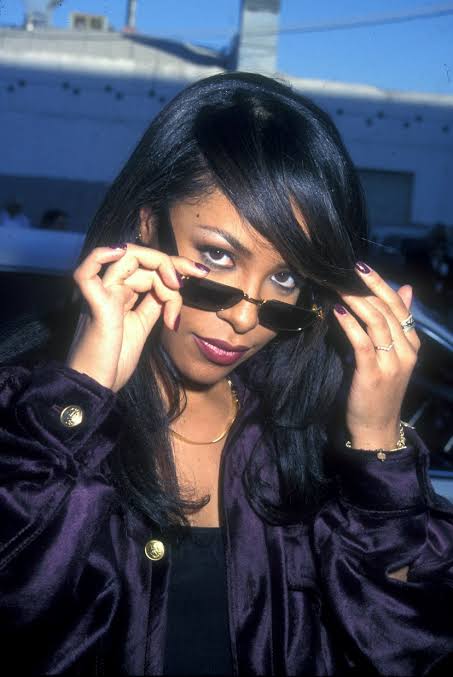
And somehow she could move from tomboy streetwear to an elegant red carpet without either version feeling like a costume.
That’s what made Aaliyah different.
She wasn’t presenting one definition of what a young Black woman was supposed to look like.
She created her own.
There was femininity without losing the edge. Sexiness without having to give everything away. Confidence without needing to announce it.
And 25 years later, we’re still seeing pieces of that image everywhere.
Sometimes we see a new artist and immediately think, That’s Aaliyah.
Sometimes it’s the hair. Sometimes it’s the clothes. Sometimes it’s the choreography. Sometimes it’s the soft vocal delivery over unconventional production.
Her fingerprints remain all over the culture.
We Were Watching a Superstar Become an Icon
By the time “Are You That Somebody?” arrived in 1998, there was no question about where Aaliyah was headed.
That record was another moment.
Timbaland gave us one of those beats that shouldn’t have worked according to the traditional rules—and Aaliyah floated across it like it had been made specifically for her.
Then came Hollywood.
Romeo Must Die.
“Try Again.”
Queen of the Damned.
Suddenly, Aaliyah wasn’t just one of R&B’s biggest young stars.
She was becoming something larger.
Music. Movies. Fashion. International recognition.
There was a sense that we were watching the beginning of what could become a decades-long career.
And she was only in her early twenties.
That’s the part that still hurts.
2001 Was Supposed to Be Her Beginning
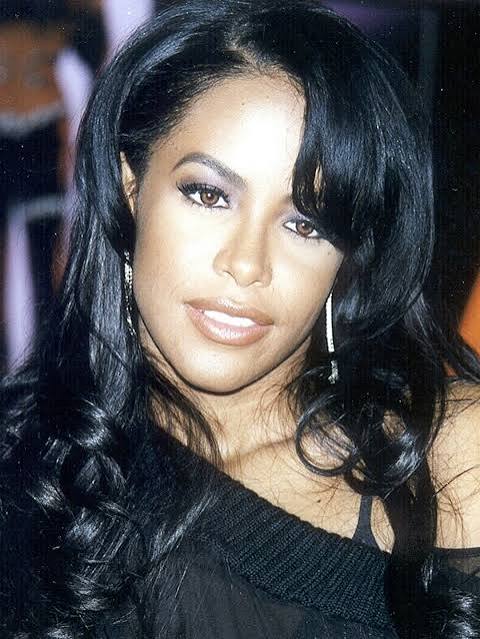
When Aaliyah arrived in July 2001, we heard a different woman.
Listen to that album now.
“Rock the Boat” · “I Care 4 U”
Aaliyah was evolving.
The music was more mature. The production was adventurous. Her vocals had grown. She sounded increasingly comfortable with the woman and artist she was becoming.
At 22, she had already lived several musical lives.
But Aaliyah felt like the moment when everything was finally coming together.
The teenage sensation was gone.
The superstar had arrived.
And we couldn’t wait to see what happened next.
August 25, 2001
Some entertainment stories become moments when you remember exactly where you were when you heard them.
For our generation, Aaliyah’s death was one of those moments.
She had traveled to the Bahamas to film the video for “Rock the Boat.” After filming wrapped, Aaliyah and members of her team boarded a small aircraft headed back to the United States.
Shortly after takeoff, the plane crashed.
Aaliyah and eight others were killed.
She was 22.
There are some celebrity deaths that shock you.
This one hurt differently.
Maybe because she was so young. Maybe because there had been no warning. Maybe because everything about her career suggested we were about to witness something extraordinary.
Or maybe because Aaliyah felt familiar.
She wasn’t distant.
She felt like somebody we knew.
Baby Girl.
Twenty-Five Years Later
A quarter-century should feel like a long time.
With Aaliyah, somehow it doesn’t.
Maybe that’s the greatest testament to what she accomplished in such a painfully short amount of time.
Artists have come and gone. Musical trends have changed. R&B has reinvented itself several times. The industry that Aaliyah knew barely resembles the one that exists today.
Yet we continue returning to her.
Young artists continue naming her as an influence. Designers and stylists continue referencing her aesthetic. Producers continue exploring sonic territory that she, Timbaland and Missy helped open. Fans continue introducing her music to their children.
And every few years, another generation discovers Aaliyah and asks the same question:
What would she have become?
We’ll never know.
Would she have become one of Hollywood’s biggest actresses? Would she have continued reinventing R&B? Would she have built businesses? Produced films? Discovered artists? Become a fashion powerhouse? Would she still be performing today?
Those questions are part of the heartbreak.
But perhaps after 25 years, there’s another question worth asking.
What did Aaliyah already become?
She became an icon.
Not because she lived long enough for someone to give her the title. Not because nostalgia made her bigger than she actually was.
But because the work survived.
The sound survived.
The image survived.
- Born January 16, 1979, in Brooklyn, New York, and raised in Detroit, Michigan
- Released her debut album, Age Ain’t Nothing but a Number, in 1994 at 15 years old
- One in a Million, released in 1996, introduced her partnership with Timbaland and Missy Elliott and helped redirect the sound of R&B
- “Are You That Somebody?” arrived in 1998 on the Dr. Dolittle soundtrack and earned a Grammy nomination
- Starred opposite Jet Li in Romeo Must Die (2000), whose lead single “Try Again” topped the Billboard Hot 100
- Her self-titled third album, Aaliyah, was released in July 2001
- Died August 25, 2001, in a plane crash in the Bahamas following the video shoot for “Rock the Boat”
- Filmed her role in Queen of the Damned, released posthumously in 2002
Forever Our Baby Girl
At Black Beat, we’ve spent decades documenting Black music and the artists who move our culture forward.
Some artists give us hits.
Some give us eras.
And every once in a while, somebody comes along who gives us something we can’t quite recreate.
Aaliyah was one of those artists.
There was only one.
Twenty-five years after losing her, we’re not remembering Aaliyah simply because of how she died.
We’re celebrating her because of how she lived.
Because of the music. Because of the dancing. Because of the videos. Because of the fashion. Because of that smile. Because of that unmistakable cool.
Because she showed young Black girls that they didn’t have to choose between being strong and soft, street and sophisticated, ambitious and graceful.
And because somehow, after all these years, hearing her voice can still make us stop whatever we’re doing and listen.
Twenty-five years have passed since Aaliyah left this world.
She is still One in a Million and she will always be!