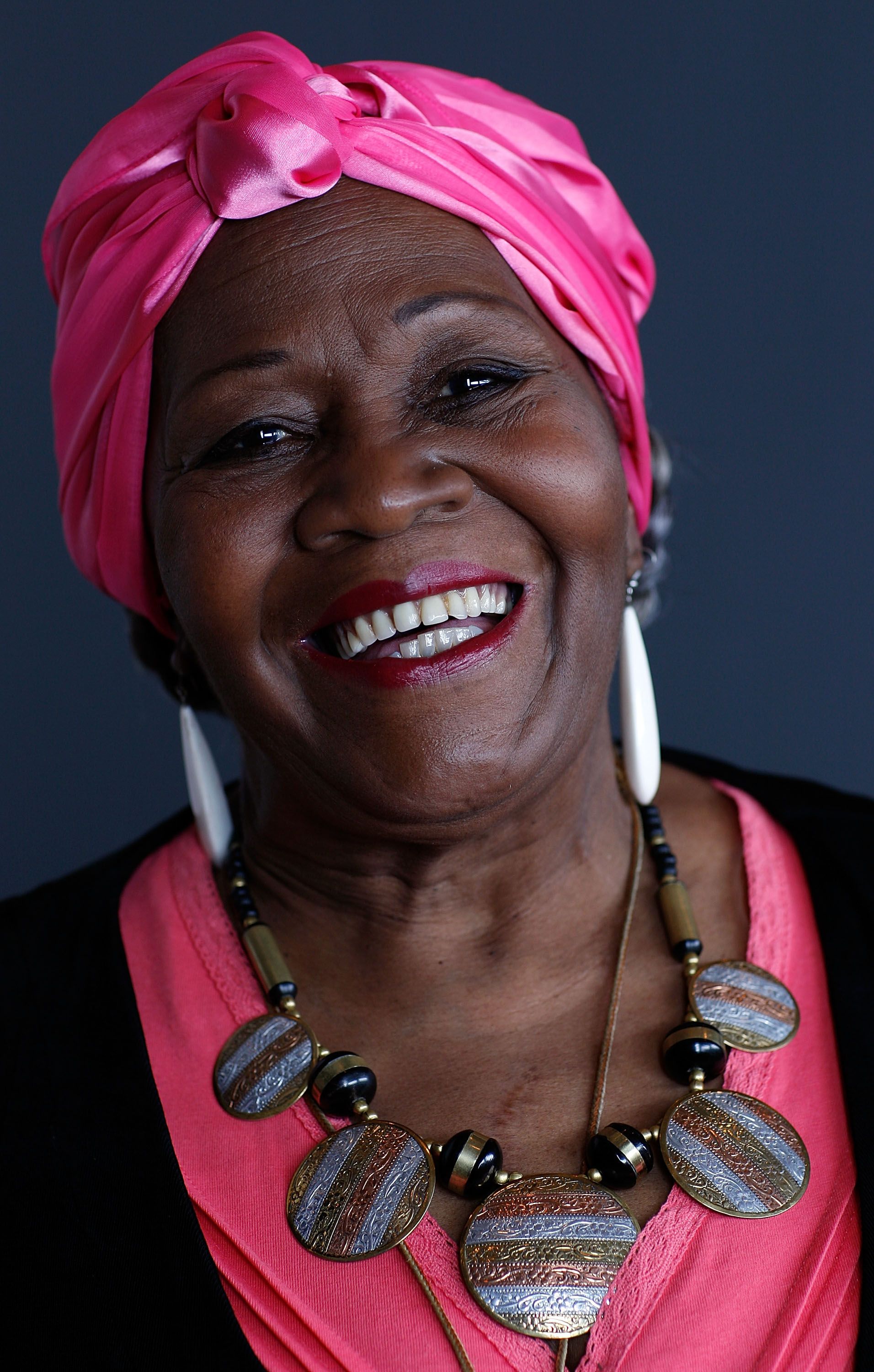
There are certain faces in Black entertainment that feel less like Hollywood celebrities and more like members of our own families. Irma P. Hall was one of those rare treasures. To millions of moviegoers, she wasn’t simply an actress playing a role. She was Big Mama, the woman whose kitchen brought everybody together, whose wisdom carried generations, and whose love reminded us that family was worth fighting for.
On November 10, 2026, Hall passed away in Dallas, Texas, at the age of 91, leaving behind a remarkable legacy that stretched far beyond the silver screen.
For generations of Black audiences, her unforgettable portrayal of Josephine “Big Mama” Joseph in the 1997 cultural classic Soul Food established her as something special. Starring alongside Vanessa Williams, Vivica A. Fox, Nia Long, and a young Brandon Hammond, Hall embodied the strength, sacrifice, humor, and unconditional love of the Black family matriarch.
Every family seemed to have a Big Mama. She was the grandmother who insisted everybody come together for Sunday dinner. The mother who didn’t tolerate foolishness but never stopped loving her children. The woman who understood that food was about more than feeding the body. It was about nourishing the soul.
And Irma P. Hall made us believe every word, every embrace, and every moment.
The Woman Who Held the Family Together
In Soul Food, Big Mama’s Sunday dinners were more than a family tradition. They were the glue holding three generations together. Through arguments, jealousy, heartbreak, and the everyday complications of family life, her dinner table remained a place where differences could be set aside.
When Big Mama’s health declined, the family began to unravel. It was a powerful reminder of how much one woman can mean to an entire family.
Hall delivered that message without theatrical excess. Her performance was authentic, familiar, and deeply emotional. It earned her an NAACP Image Award and secured her place in Black cinematic history.
The film’s emotional impact was further amplified by its celebrated soundtrack, particularly Boyz II Men’s timeless ballad “A Song for Mama,” written and produced by Kenneth “Babyface” Edmonds. The song became inseparable from the film’s tribute to mothers and the extraordinary women who hold families together.
Nearly three decades later, audiences still associate Hall’s face with that powerful musical celebration of motherhood.
A Hollywood Career That Proved It’s Never Too Late
What made Hall’s success particularly inspiring was the unconventional path she traveled to achieve it.
Born Irma Dolores Player on June 3, 1935, in Beaumont, Texas, she spent much of her early life in Chicago before eventually returning to Texas.
Long before Hollywood knew her name, Hall was an educator, teaching English and foreign languages for more than two decades. She was also a poet whose creative talents would unexpectedly open the door to acting.
After actor and director Raymond St. Jacques heard her recite poetry, he cast her in the 1973 film Book of Numbers.
Although she continued acting over the following years, her major Hollywood breakthrough didn’t arrive until she was 60, when she appeared opposite James Earl Jones and Robert Duvall in the critically acclaimed 1996 drama A Family Thing.
Her portrayal of Aunt T, a blind woman whose wisdom helped two brothers confront their complicated family history, revealed an extraordinary talent capable of commanding the screen alongside some of Hollywood’s most respected actors.
A year later, Soul Food transformed her into a beloved cultural figure.
Hall went on to appear in numerous films, including Beloved, Patch Adams, Midnight in the Garden of Good and Evil, Collateral, and Tyler Perry’s Meet the Browns.
In 2004, she delivered another career-defining performance opposite Tom Hanks in the Coen brothers’ comedy The Ladykillers. Her portrayal of the feisty, churchgoing Marva Munson earned her a Jury Prize at the Cannes Film Festival.
It was international recognition for a woman whose greatest strength had always been her ability to make ordinary people feel extraordinary.
- Born Irma Dolores Player on June 3, 1935, in Beaumont, Texas
- Taught English and foreign languages for more than two decades
- Film debut in Book of Numbers (1973), cast by Raymond St. Jacques
- Breakthrough as Aunt T in A Family Thing (1996) opposite James Earl Jones and Robert Duvall
- Josephine “Big Mama” Joseph in Soul Food (1997) — NAACP Image Award
- Beloved, Patch Adams, Midnight in the Garden of Good and Evil, Collateral, Meet the Browns
- Marva Munson in The Ladykillers (2004) — Jury Prize, Cannes Film Festival
- Helped establish the Dallas Minority Repertory Theatre
More Than an Actress
Beyond the cameras and red carpets, Hall remained committed to education, theater, faith, and community.
She helped establish the Dallas Minority Repertory Theatre, creating opportunities for performers and helping nurture artistic talent. Her dedication to young people continued through her church and community involvement.
She understood the importance of telling stories that Hollywood had too often overlooked, particularly those of older Black women whose strength and influence shaped generations.
Hall wasn’t interested in portraying women as one-dimensional figures. Her characters were funny, opinionated, stubborn, loving, vulnerable, and resilient.
They were women who had survived life’s disappointments while continuing to provide emotional support for everyone around them.
They were the women who raised us.
And perhaps that explains why audiences connected with her so deeply. She didn’t have to remind us of somebody we knew. She felt like somebody we knew.
A Legacy That Will Never Leave the Table
In announcing her passing, Hall’s family remembered her not only for her acting accomplishments but also for her work as an author, poet, educator, and public speaker.
Her daughter, Irma Hall Crayton, reflected on how her mother’s gift for teaching ultimately reached far beyond the classroom, touching people around the world.
That may be the most fitting description of Hall’s extraordinary life.
She taught us about perseverance by finding major success later in life. She taught us about dignity through characters who demanded respect without sacrificing compassion. And through Soul Food, she reminded us that families require patience, forgiveness, and sometimes the courage to sit down together even when things aren’t right.
For Black America, Irma P. Hall represented something Hollywood could never manufacture: authenticity.
She gave a face to the grandmothers, aunties, mothers, and community elders who built strong families, often without recognition or applause.
Although her passing marks the end of a remarkable life, her presence will remain in our homes every time Soul Food plays, every time “A Song for Mama” brings someone to tears, and every time a family gathers around a Sunday dinner table.
Because Big Mama was never just a character.
She was a reminder of where we come from, who raised us, and why we must never forget the women who held everything together.
You weren’t just Hollywood’s Big Mama. You were everybody’s Big Mama.
Black Beat Magazine celebrates the life, career, and enduring cultural legacy of Irma P. Hall.
For more news, culture and entertainment coverage, visit BlackBeatMagazine.com and follow us on Instagram at @blackbeatmagazine.
HONORING THE LEGENDS.
PRESERVING THE LEGACY.
Black Beat Magazine — blackbeatmagazine.com • Instagram: @blackbeatmagazine